Let's get started. It is NOT pronounced geo-duck. Nope. That would be too easy. It is pronounced gooey duck, from an Indian word that looked more like "GWEDUC," which is loosely translated as "dig deep." Anyway, time and spelling changed as it has a way of doing and we wind up with the absolutely awesome, positively enormous clam they call the geoduck (gooeyduck). Remember the old line about "Is that a gun in your pocket, or are you just happy to see me?" Well, at Taylor Shellfish headquarters in Shelton, Washington, the wall of the retail store is graced by a picture of the stars of the TV show DIRTY JOBS, which asks the question:"Is that a geoduck in your pocket, or are you just 'happy sashimi'?" It is often used in sushi, sashimi and other fine and Asian dining situations or you can just make a chowder, but considering how hard they are to get, or how expensive they are to buy, why would you?
Want some averages? OK. The average farmed geoduck is raised for 5 years, weighs 2 1/2 pounds and costs, are you ready, about 15 dollars a pound, give or take a little. So a thirty dollar bill will buy you ONE geoduck clam at Taylor Shellfish. Man, that's a lot of clams for just one clam. Especially for one that is just plain, well, a tad on the obscene side- hence the 'happy sashimi' line above works pretty well. Wanna see what I mean?


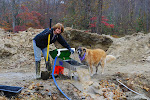
So if you have never seen or heard of these before, now you get the idea, huh? Above, a single geoduck and then a case of them. From the very beginning, this type of clam is too big for its shell- and it only gets worse with ensuing years of growth. Even the siphons you see on these clams can extend for about three feet- which helps to explain why the clam is named the way it is- it literally lives 3 or more feet deep in the mud flat and at the very edge of the low-water tide range. So a person who wants to try to capture a wild geoduck must wait for a drain tide, then dig a deep hole and dig it fast. If you are a YouTube user, there are some pretty hysterical videos on line about people out trying to dig these clams up. And I would especially like to recommend that you visit Taylor website and then click on the video page and see the great videos they have to offer for your viewing pleasure. Here is a link: Just click on it to visit their site....and check out those videos.
In the wild, these clams can grow as large as 15 pounds! 15 pounds! I have dug just about every kind of clam this great land has to offer, but I never did find one of these. But I will. Sooner or later. Now where did I put that bucket list?
But Taylor's is not just about the geoducks. They also farm blue mussels, manila clams, and a whole host of different oysters. On this visit we did not see the mud flats where these delicacies are farmed, we visited the headquarters and saw the processing and shipping facilities. We enjoyed the tour so much that we actually went through a second time. Owing to the nature of the work, the plant is largely damp, quite cold, and has low light, making it hard to photograph fast moving objects- like say the hands of the oyster shuckers. Those individuals can shuck an oyster and move on to the next one faster than I could even focus the lens! Some of them were incredibly skilled at the process.
One thing we found interesting about both Washington and Taylor Shellfish is the ownership rights permitted in this state that are most assuredly not available in other states. Here, an individual or a company can actually own the tidal lands- meaning that they can own the land below the water, and they can own that land all the way out to the dead low water line. Like mineral rights ownership, you may own a property and NOT own the tidal land in front of it...or vice versa. But the very idea that someone can come out from their house on the shore and tell you to "get off my land" a half mile out on the mud flat in front of their place is odd. Especially since they explained at the farm that a lot of individuals think they own the tidal rights in front of them, but may well not. Good to know! Here are some images from the day:
Oh, did I mention you have to wear a hair net in the plant? Just wondering....